
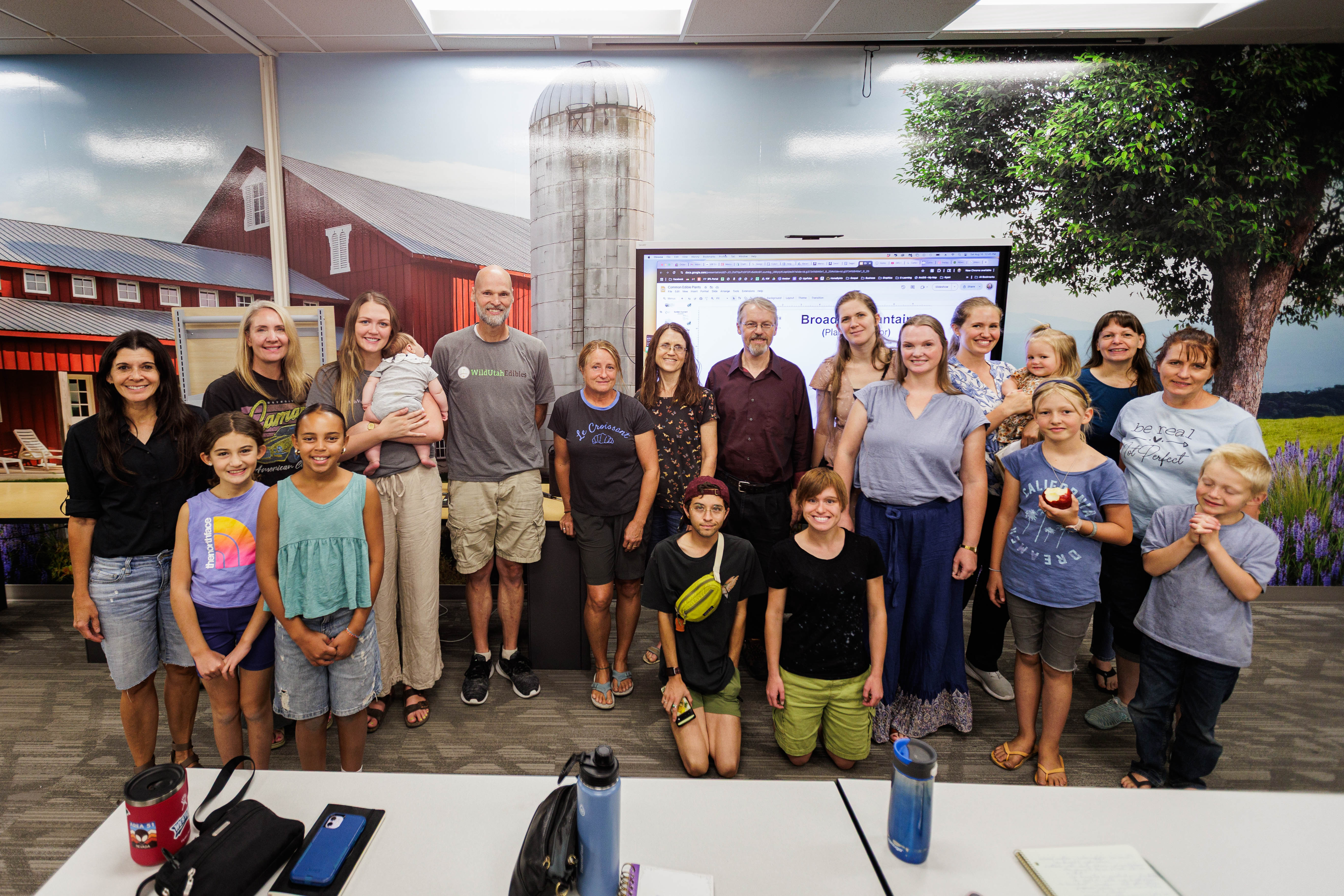
Mike Wood shared his expertise with us on edible plants that are common and native in our beautiful Utah desert climate. Mike’s interest in eating wild foods started as a website building project. WildUtahEdibles.com he dubbed it. And he and it grew to become a specialist on the subject. He has since written a book and been featured on the news, but his favorite part is still leading groups out to identify their first Sego Lily, Curlycup Gumweed, Salsify, Elderberries and more.

Mike goes gathering all year round and believes it is important to be able to recognize a plant in all the stages of its life. He also takes it a step further, and looks to determine the health of a plant, such as whether dandelions have been exposed to weed killer or are receiving enough water or sunshine.
Mike taught us many of the fun, healthful, and interesting uses for many of these plants as well. More than for just supplementing a salad, there is a renet containing plant for making soft cheeses; or adding chokecherries in your jam will help thicken it with their high natural pectin; biscuit root with a little drying and grinding you can make actual biscuits out of; and tinctures and teas to keep you well through the winter and make some of the more bitter (liver healing) herbs more tolerable.
One of the most impressive things about this class, even more than learning the amount of omega-3 fatty acids in Purslane, were the many people who attended. There were several who were already seasoned gatherers themselves. But as lifelong learners they were there to see what more they could add to their knowledge. There were helpful tips and tricks shared such as slightly fermenting the herbs before drying to add the benefits of probiotics.

Lastly, Mike stated that there are some look-a-like plants to be wary of. Local nightshades and hemlocks such as Jimson Weed, Water Hemlock (known by the purple blotches on its stems), and Death Camas need to be avoided. Mike emphasized that it’s just as important to be able to identify plants like these and others in order to forage safely. But he urged to not be caught in the fear of them; just be positive you know what something is before you eat it.
In conclusion it was very fulfilling to gather together, at a time where it’s less and less common to do so, and learn from a real live person some of this lost and forgotten knowledge of our ancestors. We are so grateful to Mike for teaching us and look forward to his return to the Sage and Plow classroom. We marvel at the many beautiful and useful plants that are upon this earth for our joy and health and are excited to try to learn them all.
